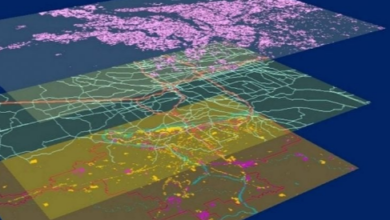
The evolution of spatial interfaces marks a significant shift in how users interact with digital content. From the initial promise of augmented reality glasses to the emergence of holographic displays, these technologies are reshaping user experiences across various sectors. This transformation not only enhances visualization and collaboration but also opens new avenues for creativity and innovation. As advancements continue, the implications for industries such as healthcare and retail remain to be explored.
The Evolution of Spatial Interfaces
As technology has advanced, the evolution of spatial interfaces has transformed the way users interact with digital environments.
Early innovations laid the groundwork, but recent technological advancements have propelled these interfaces into immersive realms.
Applications Across Industries
The integration of spatial interfaces into various industries has opened new avenues for innovation and efficiency.
In healthcare training, immersive simulations enhance learning, while retail experiences revolutionize customer engagement through interactive displays.
Architectural visualization allows clients to experience designs in real-time, fostering collaboration.
Additionally, gaming environments leverage these technologies to create dynamic, engaging experiences, ultimately transforming how users interact with digital content across sectors.
Read also: Call Tracker Overview: 4234818015, 4234820546, 4234987175, 4235463005, 4235561624, 4236623385
The Future of Interaction and Creativity
How will the evolution of spatial interfaces shape the future of interaction and creativity?
These technologies promise to revolutionize immersive storytelling, allowing creators to engage audiences in unprecedented ways.
Furthermore, they foster creative collaboration across diverse disciplines, breaking down barriers to innovation.
As spatial interfaces evolve, they will empower individuals to express ideas and narratives in dynamic, interactive environments, redefining artistic possibilities.
Conclusion
In conclusion, the evolution of spatial interfaces from AR glasses to holographic displays marks a revolutionary leap in how users interact with digital environments. As these technologies become more integrated across various industries, they promise to transform user experiences into breathtaking journeys, where imagination knows no bounds. The future of interaction and creativity is poised to be as limitless as the cosmos, opening new avenues for innovation that will redefine the way we perceive and engage with our world.